

Blood pressure, with the live curve
Non-invasive blood pressure measurement by high-definition oscillometry, connected to INpulse One and the INcloud cloud. You follow the pressure curve in real time, with systolic, mean and diastolic marked, and keep the patient pressure history.
Veterinary blood pressure, with the curve on screen
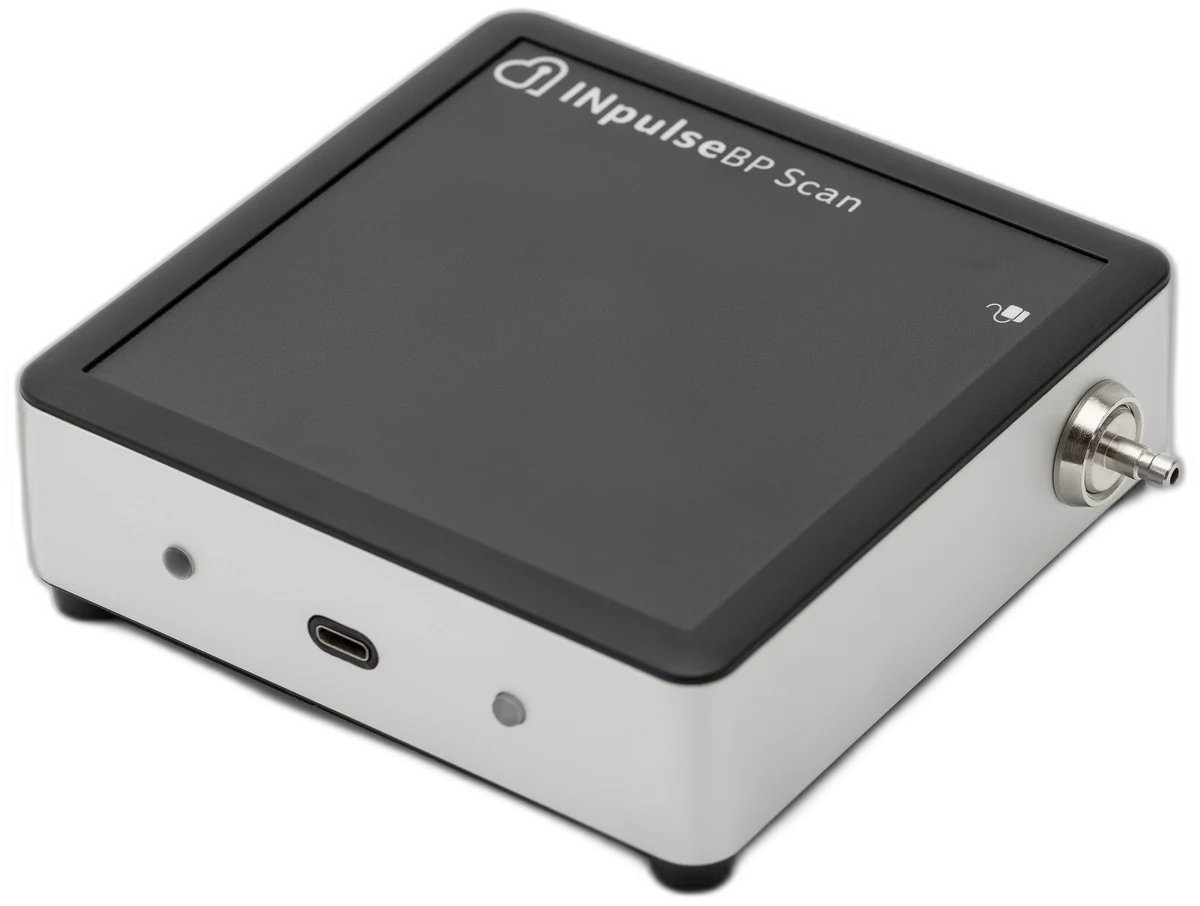
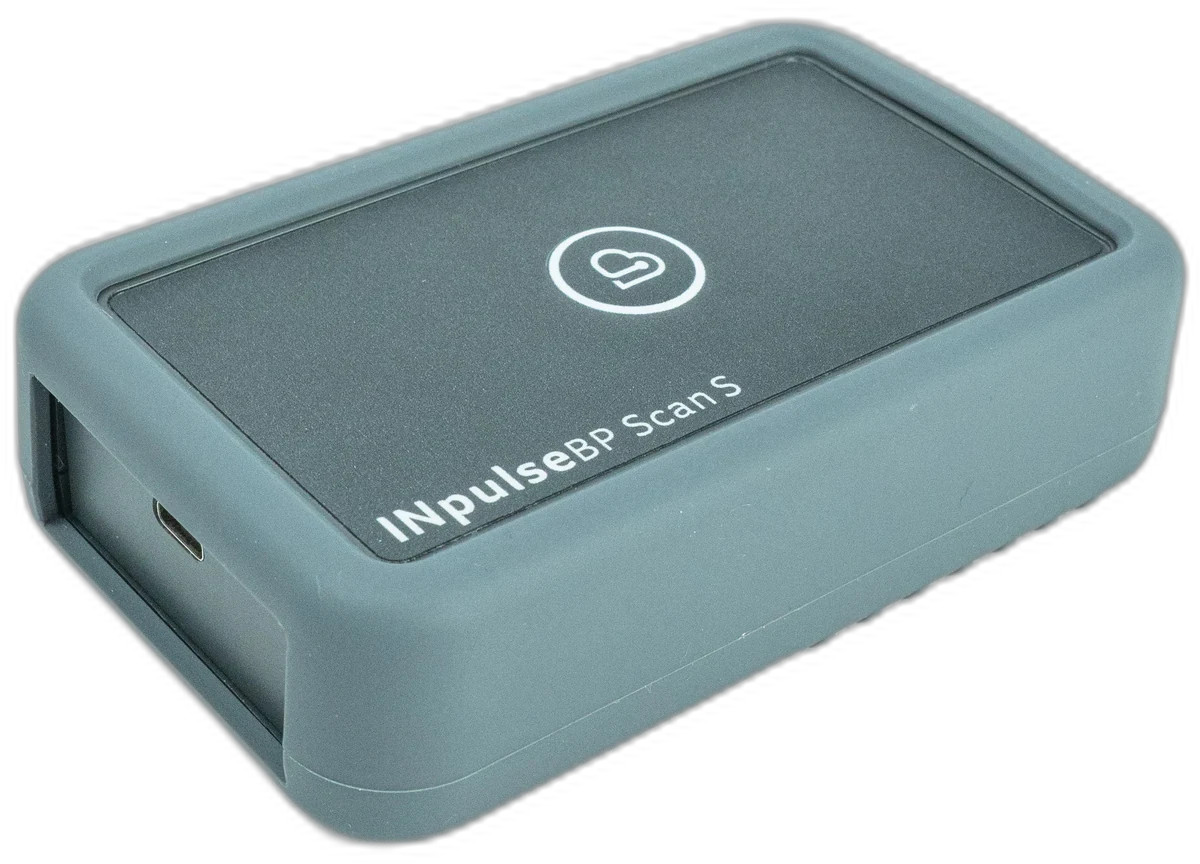
INpulse's connected blood pressure is non-invasive blood pressure measurement (NIBP) by high-definition oscillometry, for clinics and hospitals that want to measure pressure with confidence and follow the patient's history. It shows the oscillometric waveform in real time, so you can assess signal quality before trusting the value, and it computes systolic, mean and diastolic pressures, even in smaller patients, under 5 kg. The BPScan and BPScan S oscillometers stay connected to the INpulse One platform and the INcloud cloud. In a peer-reviewed study of 11 anesthetized dogs, the linear deflection oscillometry (LDO) of the INpulse algorithm agreed better with invasive pressure than Doppler during hypotension (Mantovani et al., <i>Veterinary Sciences</i>, 2025). <a href='/en/scientific-evidence/'>See the study and its limits</a>.
Which oscillometer for each routine
Both measure with the same high-definition oscillometry, the same live curve and the same range. The choice is about form: BPScan has an internal battery and wireless connectivity; BPScan S is compact, plug and play over USB-C.
| BPScan | BPScan S | |
|---|---|---|
| Method | High-definition oscillometry | High-definition oscillometry |
| Power | 1600 mAh battery, wireless | USB-C, no battery |
| Connectivity | USB, Bluetooth and Wi-Fi | USB-C |
| Weight | 375 g | 175 g (no case) |
| Live HD curve | yes | yes |
| Range | 20 to 280 mmHg | 20 to 280 mmHg |
| Resolution | 1 mmHg | 1 mmHg |
Both measure the same and send the reading to the same INpulse One and the same INcloud.
From the reading to the cloud, connected
- 01 Cuff you place the right-sized cuff (kit no. 1 to 5) on the BPScan or the BPScan S and start the reading.
- 02 Live HD curve high-definition oscillometry draws the curve in real time and computes SBP, MAP and DBP on every reading.
- 03 PDF report the NIBP report comes out ready, with the curve, the values and your clinic details.
- 04 INcloud the reading uploads and stays linked to the patient record, building the pressure history. NIBP stays in the cloud, with no remote report.
The measurement tools
What your clinic uses
When pressure matters
- Systemic arterial hypertension
- Feline chronic kidney disease
- Geriatric feline patient
- Pre-anesthetic and pre-operative assessment
- Small patients (< 5 kg)
- Endocrinopathies affecting blood pressure
The reading does not stop at the number
The curve and the values flow to INpulse One (NIBP PDF report) and to INcloud, where the pressure history stays linked to the patient record, always at hand. In monitoring, NIBP feeds the anesthesia record in real time. Pressure is stored in the cloud, with no remote report.
Talk to a specialistFrequently asked questions
What is the normal blood pressure value in dogs and cats?
Blood pressure varies with species, size, breed and the animal’s stress during the visit. By the ACVIM consensus (2018), systemic arterial hypertension is considered from a systolic blood pressure (SBP) equal to or above 160 mmHg, with the risk of target-organ damage rising as SBP increases. Interpretation is up to the veterinarian, within each patient’s clinical context.
What is the difference between Doppler and oscillometric, and what is high-definition oscillometry?
In the Doppler method, the operator listens to blood flow to estimate systolic pressure; it is manual and depends on the operator’s experience. In the oscillometric method, the device detects arterial wall oscillations in the cuff and computes systolic, mean and diastolic pressures automatically. High-definition oscillometry samples those oscillations at higher resolution and shows the oscillometric waveform in real time, helping to assess signal quality before trusting the value, a BPScan feature.
Where to place the cuff (tail or limb) and what size?
The cuff can be placed on a limb (forearm or hock) or at the base of the tail, kept at roughly heart level with the animal calm. The size should respect the recommended ratio to the circumference of the site: a too-tight cuff overestimates and a too-loose one underestimates pressure. BPScan comes with cuffs of different sizes for varied patient sizes; always standardize the site and procedure across measurements.
When to measure blood pressure in routine (feline geriatric, CKD, anesthesia)?
Measurement is especially useful in geriatric cats, in patients with chronic kidney disease (CKD), endocrinopathies or heart disease, and in anesthetic and peri-operative monitoring, situations associated with pressure changes. Including blood pressure in the routine assessment of these groups helps detect hypertension early; indication and frequency are up to the veterinarian.
Go deeper
- The oscillometric waveform: why you should read the curve before trusting the blood pressure number
- Normal Blood Pressure Values in Dogs and Cats: The ACVIM 2018 Classification
- Oscillometry vs. Doppler: Which Is the Safer Choice for Your Patient?
- Feline Systemic Hypertension: The Silent Threat to Senior Cats
- Feline Chronic Kidney Disease and Blood Pressure: Why Routine Measurement Matters
Start measuring connected blood pressure
From the live curve to the history in the cloud, in the same ecosystem.
See frequently asked questions