

Normal Blood Pressure Values in Dogs and Cats: The ACVIM 2018 Classification
Per the ACVIM 2018 consensus, systolic blood pressure below 140 mmHg is considered normotension in dogs and cats. Learn the four risk categories, the measurement methods and when to measure.
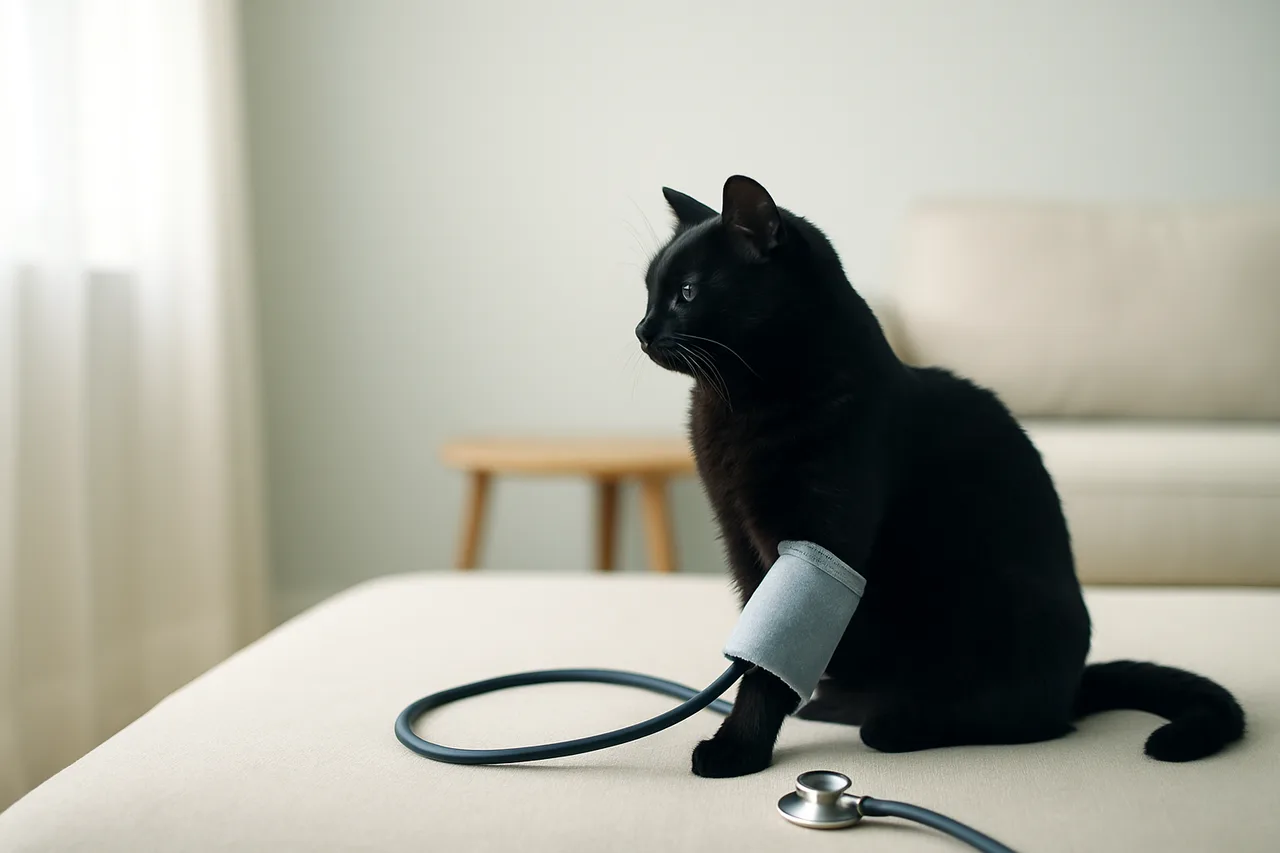
In conscious dogs and cats, a systolic blood pressure (SBP) below 140 mmHg is considered normotension and is associated with minimal risk of target-organ damage, according to the ACVIM 2018 consensus (Acierno et al., J Vet Intern Med). From 140 mmHg upward, the consensus defines four categories of increasing risk, and a diagnosis of hypertension requires repeated, standardized readings, always interpreted by the attending veterinarian in the patient's context.
The four risk categories of the ACVIM 2018 consensus
The consensus uses SBP as its reference and links each band to a risk of future target-organ damage. The bands apply to both dogs and cats, with the caveat of sighthound breeds, in which values around 20 mmHg higher are considered physiological within each category.
The category guides management but does not replace it. Patients in the prehypertensive band are generally not started on antihypertensives right away but rather monitored more frequently; the decision to treat and the therapeutic targets rest with the attending veterinarian.
| Category | SBP (mmHg) | Target-organ damage risk |
|---|---|---|
| Normotensive | below 140 | minimal |
| Prehypertensive | 140 to 159 | low |
| Hypertensive | 160 to 179 | moderate |
| Severely hypertensive | at or above 180 | high |
What target-organ damage means
Target-organ damage (TOD) is the harm caused by high, sustained blood pressure to the most vulnerable organs: eyes, brain, heart and kidneys. In cats, ocular manifestations such as retinal detachment, retinal hemorrhage and hyphema are among the most common findings and may be the first evidence of hypertension. For this reason, the consensus recommends measuring blood pressure in patients with predisposing diseases, such as chronic kidney disease, hyperthyroidism (cats) and hyperadrenocorticism (dogs), and whenever signs consistent with TOD are present.
How to measure: Doppler, oscillometry and high-definition oscillometry
In clinical practice, blood pressure is measured indirectly (non-invasively). The three most common approaches are Doppler sphygmomanometry, conventional oscillometric devices and high-definition oscillometry (HDO), which analyzes the oscillation curve at higher resolution. The consensus stresses that no device has fully met all validation criteria in conscious dogs and cats, which underscores the importance of a standardized technique.
Cuff size is critical: its width should be about 30% to 40% of the limb circumference at the placement site. A cuff that is too narrow overestimates pressure; one that is too wide underestimates it. The first measurement should be discarded, and the average of 5 to 7 consecutive, consistent readings is recorded.
Cuff width: about 30%-40% of limb circumference · Readings: discard the first and average 5-7 consistent ones · Preferred method in cats: commonly Doppler. The choice of method, site and the final interpretation are the responsibility of the attending veterinarian.
When and how to measure: avoiding the white-coat effect
The rise in pressure induced by anxiety or excitement (the white-coat effect, or situational hypertension) can lead to an erroneous diagnosis of true hypertension. To reduce it, the consensus recommends a calm, quiet environment with an acclimatization period, ideally with the owner present and before other stressful procedures.
A diagnosis of hypertension is never based on a single isolated visit in the absence of TOD. In prehypertension and moderate-risk hypertension (140-179 mmHg), confirmatory measurements may be spread over 4 to 8 weeks. In the severely hypertensive band (at or above 180 mmHg), the risk of TOD justifies completing the assessment within 1 to 2 weeks, or immediately when target-organ damage is already evident.
This content is informational and does not replace clinical evaluation. Interpreting the values, making the diagnosis and deciding on treatment always rest with the responsible veterinarian.
Sources
- Acierno MJ, Brown S, Coleman AE, Jepson RE, Papich M, Stepien RL, Syme HM. ACVIM consensus statement: Guidelines for the identification, evaluation, and management of systemic hypertension in dogs and cats. J Vet Intern Med. 2018;32(6):1803-1822. (2018) PMID 30353952
- Acierno MJ, et al. ACVIM consensus statement on systemic hypertension in dogs and cats (full text, PMC). (2018) PMID 30353952
- IRIS (International Renal Interest Society). Hypertension in dogs and cats.