

B2B buying guide: how to choose a veterinary blood pressure (NIBP) monitor
Before investing in a blood pressure monitor for the clinic, what really sets a reliable device apart: measurement method, validation per the ACVIM consensus, cuff variety, ease of use in cats and small dogs, and platform integration.
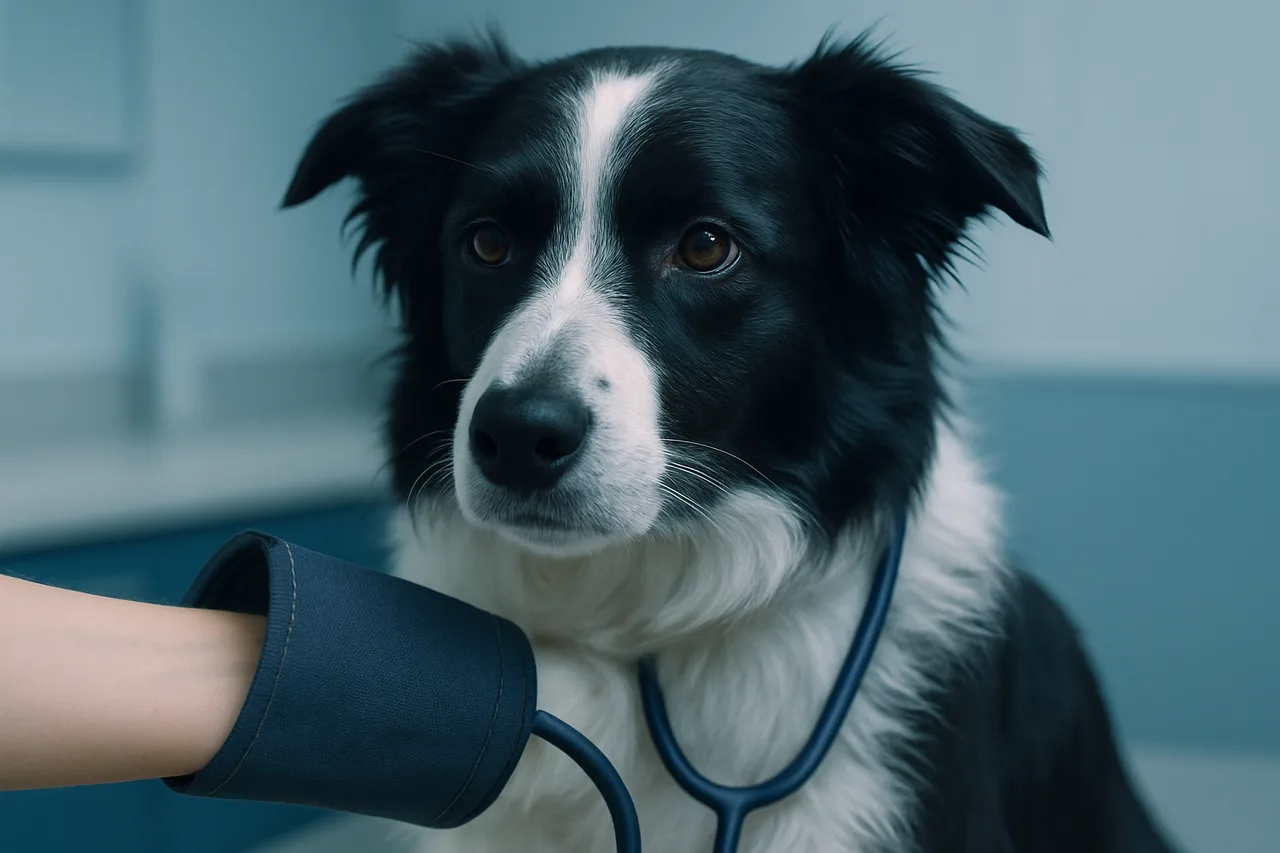
To choose a veterinary blood pressure (NIBP) monitor, weigh five objective criteria: the measurement method (Doppler gives systolic pressure only; oscillometry gives systolic, diastolic and mean, and high-definition oscillometry also displays the curve, letting you check the quality of the reading); device validation against the ACVIM consensus criteria; cuff variety, since cuff width should be about 30 to 40 percent of the limb circumference; the ease of obtaining consistent readings in cats and small dogs; and connectivity that links every reading to the medical record and the cloud. None of these criteria replaces clinical judgment: the decision to diagnose hypertension and start therapy always rests with the veterinarian.
1. Measurement method: Doppler, oscillometry and high-definition oscillometry
The method defines what you can measure and how much you can trust the result. According to the ACVIM consensus, Doppler ultrasonography provides systolic pressure only, while oscillometric devices estimate systolic, diastolic and mean pressure. That difference matters when management depends on more than one parameter.
Oscillometry derives pressure from the amplitude curve of the oscillations the pulse generates inside the cuff. In conventional oscillometry this curve is invisible to the operator, who only receives the final number, with no way to tell whether it came from a clean signal or from a curve distorted by motion, arrhythmia or a poorly placed cuff.
High-definition oscillometry adds the ability to visualize the pulse curve. Just as the clinician reads the ECG trace before trusting the heart rate, or the plethysmographic curve before trusting the SpO2, seeing the pressure curve allows judging whether a reading is reliable. We explore this reasoning further in the article on the oscillometry curve.
2. Validation per the ACVIM consensus
A number is only worth as much as the testing behind the device that produced it. The 2018 ACVIM consensus reinforces that a set of criteria has been proposed and accepted for validating indirect blood pressure devices in conscious dogs and cats, and recommends that equipment not subjected to appropriate testing in awake animals should not be used.
In practice this means asking the manufacturer for published validation evidence, ideally from studies comparing the indirect method against direct invasive measurement in the species of interest. One example of this literature is the study by Martel and colleagues, which compared high-definition oscillometry with direct telemetry in conscious cats and concluded that the method met the ACVIM panel validation criteria for systolic pressure.
The consensus is cautious in noting that, to date, few devices have fully met these criteria in conscious animals. That is why the purchasing filter is not the brand name but the evidence: which study, in which species, against which reference.
3. Cuff size and variety
Selecting a correctly sized cuff is critical to measurement accuracy. The ACVIM consensus specifies that cuff width should be about 30 to 40 percent of the circumference of the extremity at the placement site. A cuff that is too narrow overestimates pressure; one that is too wide underestimates it.
In veterinary practice this translates into variety: the same device may need to serve everything from a cat or a small-breed puppy to a large dog. When comparing equipment, check the range of available and compatible cuff sizes, because an excellent device with a single cuff serves only a fraction of patients.
It is also worth checking the reference marking on the cuff and how easily the correct size can be identified reproducibly across different team members, since part of the measurement error originates in cuff choice and placement, not in the device.
4. Ease of use in cats and small dogs
Small patients are precisely the hardest to measure and, often, those at greatest risk of secondary hypertension. The ACVIM consensus recommends positioning the animal in ventral or lateral recumbency to limit the vertical distance between the heart base and the cuff, allowing 5 to 10 minutes of acclimation, recording 5 to 7 consecutive consistent values, discarding the first reading and averaging the rest.
A device suited to cats and small dogs must handle low-amplitude pulses and subtle movement without multiplying failed readings. Here high-definition oscillometry helps again: by exposing the curve, it lets you distinguish a valid measurement from a spurious one instead of simply repeating the cycle blindly.
When evaluating a purchase, observe how long each cycle takes, how often the device fails to obtain a reading in these patients and how well the workflow supports the repeated-measurement protocol, because equipment that makes the protocol cumbersome tends to be used incompletely.
5. Connectivity and platform integration
A pressure reading is rarely an isolated event: it only gains meaning when compared with the same patient's previous readings, over time and across visits. A device that simply records and nothing more leaves that work to manual notes, prone to loss and transcription error.
That is why connectivity weighs on the decision. Equipment that sends every reading directly to the medical record and the cloud preserves the history, eases serial comparison and lets more than one professional follow the same patient's progression. When the device also records the curve, that quality data travels with it and is not lost.
In the INpulse line, the BPScan and BPScan S blood pressure monitors are designed to talk to the INpulse One platform and to INcloud, so that every reading is born already connected to the animal's history. The final choice, however, should always consider the clinic's patient profile and the consensus recommendation, at the veterinarian's discretion.
Quick checklist
When comparing blood pressure monitors, ask: does the method deliver the parameters I need (systolic only with Doppler, or systolic, diastolic and mean with oscillometry)? Can I see the curve to check measurement quality? Is there published validation evidence in the species I see most? Does the cuff range cover everything from cats to large dogs, with a width of 30 to 40 percent of the circumference? Does the workflow work in small patients and support the repeated-measurement protocol? And does every reading integrate with the medical record and the cloud? The answers to these questions, combined with clinical judgment, guide a purchase that serves the practice for years.
Sources
- ACVIM consensus statement: Guidelines for the identification, evaluation, and management of systemic hypertension in dogs and cats (2018) PMID 30353952
- Guidelines for the identification, evaluation, and management of systemic hypertension in dogs and cats (2007) PMID 17552466
- Comparison of high-definition oscillometry, a non-invasive technology for arterial blood pressure measurement, with a direct invasive method using radio-telemetry in awake healthy cats (2013) PMID 23813147