

Feline Chronic Kidney Disease and Blood Pressure: Why Routine Measurement Matters
Chronic kidney disease is a leading cause of systemic hypertension in cats. Understand why routine blood pressure measurement protects the eyes, heart, brain and kidneys, according to the ACVIM consensus and feline guidelines.
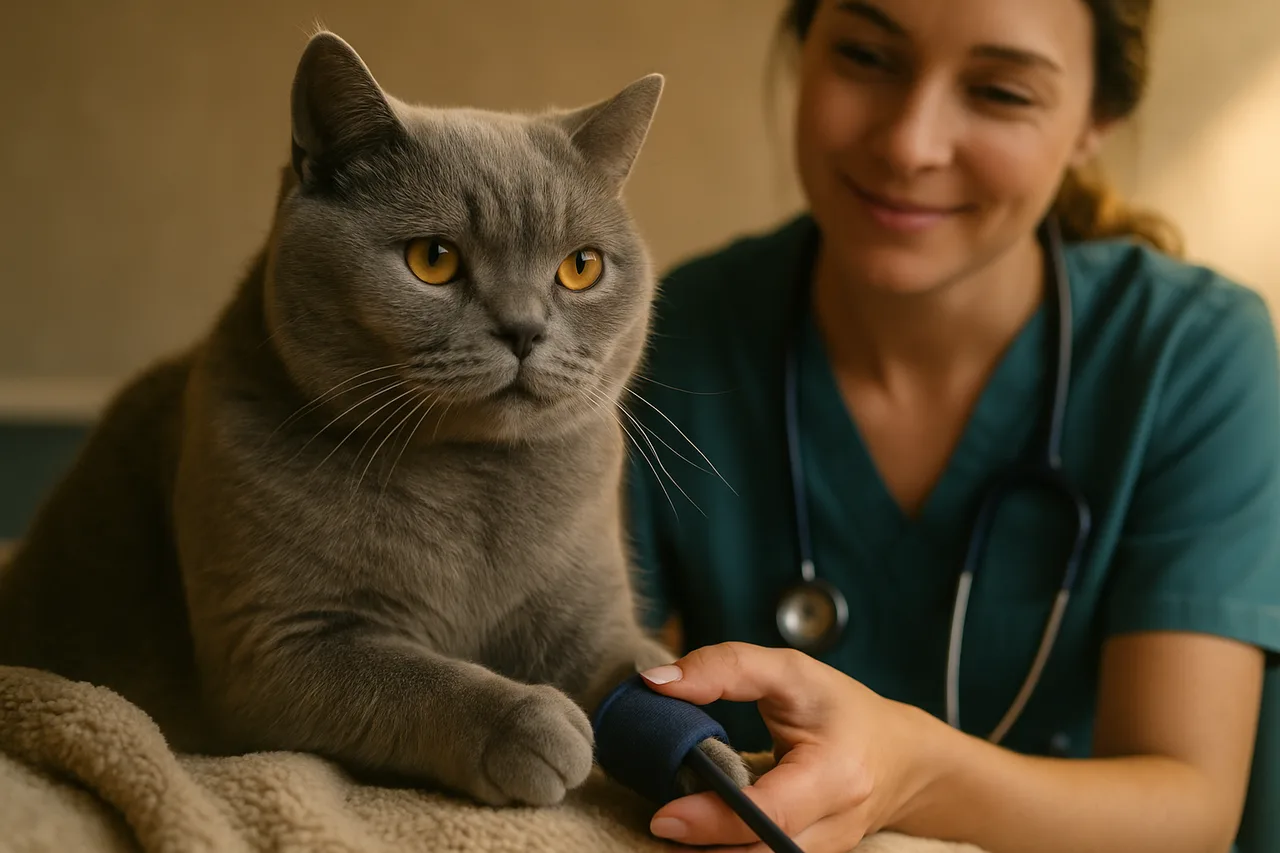
Chronic kidney disease (CKD) is one of the leading causes of systemic hypertension in cats, which is why the ACVIM consensus statement (Acierno et al, 2018) and the ISFM feline guidelines (Taylor et al, 2017) recommend routine blood pressure measurement in every renal patient. Hypertension is frequently silent: it may produce no signs until it has already damaged target organs such as the eyes, heart, central nervous system and the kidneys themselves. For this reason, measuring blood pressure is not an exceptional test in the cat with CKD, it is part of ongoing care. The final clinical decision, including when to treat, always rests with the attending veterinarian.
CKD and hypertension in cats: a two-way relationship
Hypertension in cats is usually secondary to another disease. CKD and hyperthyroidism are among the conditions most associated with feline hypertension, as described in the ISFM guidelines. The mechanisms by which renal disease raises blood pressure are multiple and include disturbances in volume regulation and activation of kidney-linked neurohormonal systems.
This relationship runs both ways. CKD predisposes to hypertension, and high blood pressure, in turn, injures the kidney and may accelerate the progression of the renal disease itself. Proteinuria, a relevant prognostic marker in the renal cat, is associated with shorter survival, as reviewed by Syme (2009), and is part of the picture the clinician evaluates together with blood pressure.
Target-organ damage: what silent hypertension attacks
The major risk of feline hypertension is target-organ damage, frequently established before the owner notices any change. The four classically affected organs, cited by both ISFM and IRIS, are the eyes, the heart and vasculature, the central nervous system and the kidney.
In the eye, hypertension can cause retinal detachment, hemorrhage and sudden blindness, sometimes the first sign that brings the cat to the clinic. In the heart, it favors left ventricular hypertrophy. In the central nervous system, it may present as lethargy, behavioral changes or seizures. In the kidney, it closes the loop, worsening the renal injury. Because many of these forms of damage can be irreversible, routine measurement is precisely the tool that allows the problem to be identified before disaster.
The ACVIM consensus risk threshold
The 2018 ACVIM consensus (Acierno et al) organizes the risk of target-organ damage based on systolic blood pressure (SBP). In this framework, an SBP equal to or above 160 mmHg is categorized as conferring an increased risk of damage, and higher values raise that risk further. The 160 mmHg threshold is therefore an important clinical reference for when blood pressure stops being merely a number and starts to represent danger to the target organs.
It is worth remembering that a single elevated value, especially in a stressful environment such as the clinic, does not establish a diagnosis. The effect of stress on a cat's blood pressure (the so-called white-coat effect) is real, which is why the guidelines emphasize standardized measurement technique, a calm environment, repeated readings and interpretation within the clinical context. Confirming hypertension and deciding to treat are the responsibility of the veterinarian.
IRIS staging as a management reference
The International Renal Interest Society (IRIS) proposes a CKD staging system that is a worldwide management reference. Beyond staging based on renal markers, IRIS substages the patient according to proteinuria and blood pressure, precisely because both are common secondary consequences of renal disease and influence prognosis.
Following this logic, IRIS itself recommends that blood pressure be measured in all dogs and cats with CKD. The system also provides that, when antihypertensive treatment is under way, the classification be re-evaluated to reflect the current pressure. The specific cut-off values for staging and substaging should be consulted directly in the current IRIS guidelines and applied by the veterinarian, who integrates these data into each patient's individual picture.
How to measure blood pressure well in cats
Measurement quality is decisive. The ISFM and ACVIM guidelines stress the need for a reproducible technique so that the number means something. This involves choosing the appropriate cuff size, letting the cat acclimate before measuring, keeping the environment calm and quiet, repeating readings and recording the measurement conditions.
This is where non-invasive blood pressure (NIBP) equipment designed for the veterinary patient, such as INpulse's BPScan and BPScan S, adds to the protocol: standardized measurements and consistent records help the clinician distinguish true hypertension from a transient stress-related rise, and follow the renal patient over time. The choice of method and the interpretation of values remain the responsibility of the veterinarian.
Frequently asked questions
Does every cat with CKD need its blood pressure measured? The ISFM guidelines and IRIS recommend measuring blood pressure in all cats with CKD, precisely because hypertension is common in this group and tends to be silent. The frequency of monitoring is set by the veterinarian according to the patient's stage and condition.
Does high blood pressure cause symptoms in cats? Often it does not, until target-organ damage appears. When signs occur, they may include visual changes or sudden blindness, behavioral changes and lethargy, which reinforces the value of routine measurement before damage sets in.
Does a high reading at the clinic mean my cat is hypertensive? Not necessarily. The stress of the visit can raise blood pressure temporarily. That is why the guidelines recommend standardized technique, a calm environment, repeated readings and interpretation in the clinical context before confirming the diagnosis.
Does hypertension worsen kidney disease? The relationship runs both ways: CKD predisposes to hypertension and high blood pressure may, in turn, worsen renal injury. This is one of the reasons blood pressure control is part of managing the renal patient, always directed by the veterinarian.
Sources
- ACVIM consensus statement: Guidelines for the identification, evaluation, and management of systemic hypertension in dogs and cats. (2018) PMID 30353952
- ISFM Consensus Guidelines on the Diagnosis and Management of Hypertension in Cats. (2017) PMID 28245741
- Proteinuria in cats. Prognostic marker or mediator? (2009) PMID 19237136
- IRIS Staging System - International Renal Interest Society (IRIS).