

Why ECG Testing Matters in Equine Athletes
Veterinary cardiology is central to equine sports medicine. See how the ECG detects arrhythmias, shapes prognosis, and helps assess athletic performance in horses.
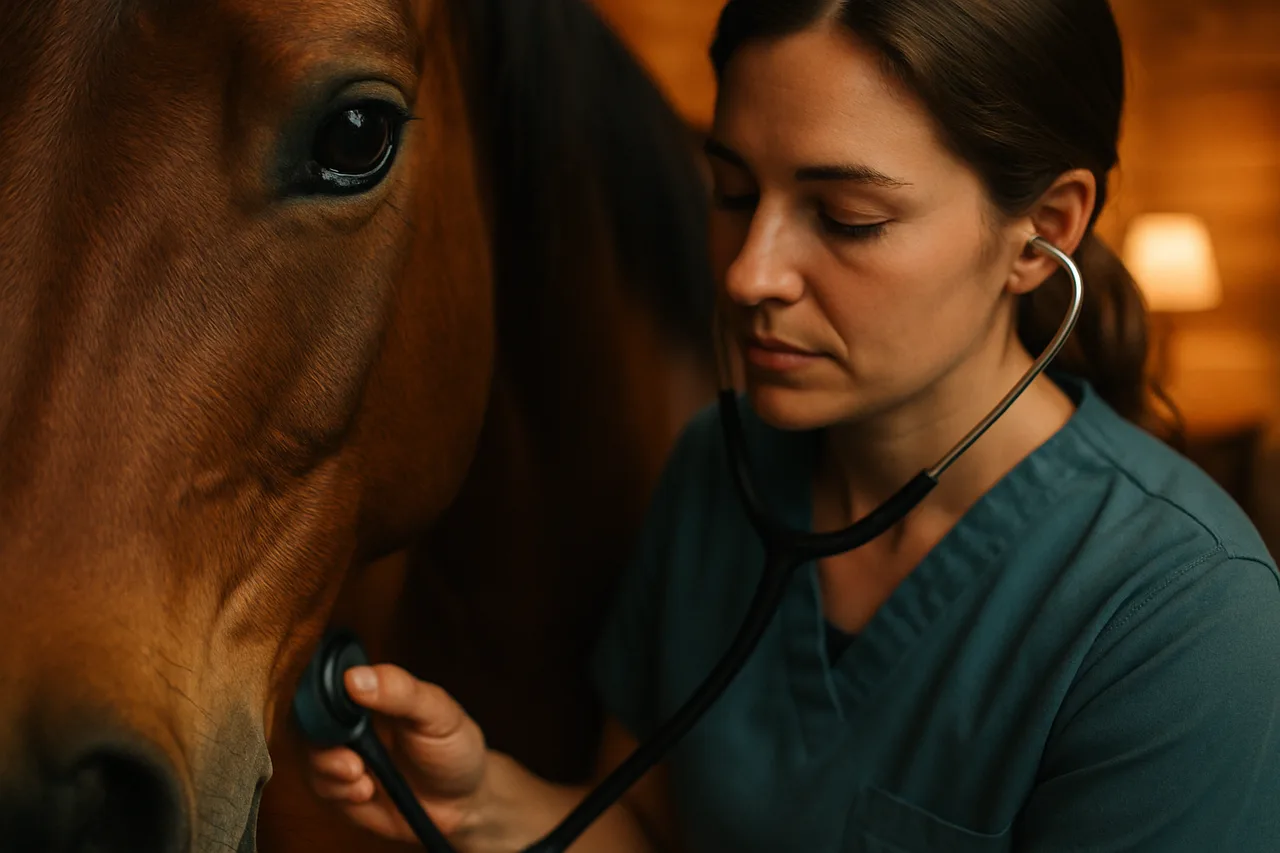
Why ECG testing matters in horses
Veterinary cardiology plays a major role in equine sports medicine, not only detecting cardiac abnormalities but also establishing prognoses for both athletic life and overall survival.
Horses show a high incidence of cardiac arrhythmias compared with other species. Many are physiological and have no impact on performance, such as first- and second-degree atrioventricular block, wandering pacemaker, and sinus arrhythmia. Others reduce performance: atrial and ventricular premature complexes, advanced second-degree atrioventricular block, third-degree block, and atrial fibrillation.
ECG testing is used to assess disorders of electrical impulse formation and conduction, to monitor cardiac disease, to detect abnormalities that are not apparent at rest, and to evaluate complications during intense exercise.
It should be part of a thorough clinical examination and is indicated preventively in pre-purchase exams, pre-surgical screening, fitness assessment, and the rational planning of sporting activity.
How the ECG is performed
The exam is a simple procedure that requires proper placement, application, and stabilization of the electrodes, using alcohol or gel to improve the signal and reduce interference.
The bipolar apex-base lead system is practical, producing regular, high-amplitude tracings. The yellow electrode is placed on the left side, above the cardiac apex; the red one on the right side, cranial to the scapula and near the jugular vein; and the black one on the animal's neck.
To reduce stress and ensure reliability, equipment with a Bluetooth system is used, allowing the operator to work up to 6 m away and cutting down on cables and connections.
Assessing athletic performance
Metabolic adaptations occur in line with training, and cardiovascular factors are essential to deliver oxygen to the muscles during physical activity.
Beyond resting monitoring, the horse is also assessed during activity demanding enough to raise energy demand and accelerate metabolism in the production of adenosine triphosphate (ATP).
Intracellular ATP reserves are low. The body uses three pathways for resynthesis: the ATP-phosphocreatine system, for explosive efforts; oxidative metabolism, which is slower but generates more energy without accumulating metabolites; and anaerobic glycolysis, activated when the aerobic threshold is exceeded or when oxygen is insufficient.
Maximal oxygen uptake and the lactate threshold are key parameters for performance assessment. The volume of oxygenated blood pumped determines how long the second energy pathway lasts; once it is depleted, the third pathway is activated, producing metabolites that are harmful to cardiac activity, with the potential to trigger arrhythmias and reduce athletic capacity.
With a complete evaluation that includes the ECG, and early recognition of changes arising from physiological demand, a favorable intervention becomes possible, improving performance while minimizing the risk of complications and sudden death.
Sources
- DINIZ, M.P.; MICHIMA, L.E.S.; FERNANDES, W.R. Electrocardiographic study in healthy showjumping horses. Pesquisa Veterinária Brasileira, vol. 31, no. 4, Rio de Janeiro, abr. 2011. (2011)
- HIRAGA, A.; SUGANO, S. History of research in Japan on electrocardiography in the racehorse. Journal of Equine Science, vol. 26, no. 1, pp. 1-13, 2015. (2015) PMID 25829865
- MELO, I.H.S.; PEREIRA, L.F.; CASAS, V.F.; JUNIOR, D.P. Achados eletrocardiográficos e níveis de lactato sanguíneo em equinos submetidos ao exercício. Investigação, 14(2):104-112, 2015. (2015)
- SCHEFFER, C.W.J.; SLOET van OLDRUITENBORGH-OOSTERBAAN, M.M. Computerized ECG recording in horses during a standardized exercise test. The Veterinary Quarterly, vol. 18, n. 1, mar. 1996. (1996) PMID 8833603