

HRV, nociception and anesthetic depth in dogs and cats
During anesthesia in dogs and cats, heart rate variability reflects vagal tone and has been studied as a complementary indicator of the nociception/antinociception balance, never as a replacement for standard multiparametric monitoring.
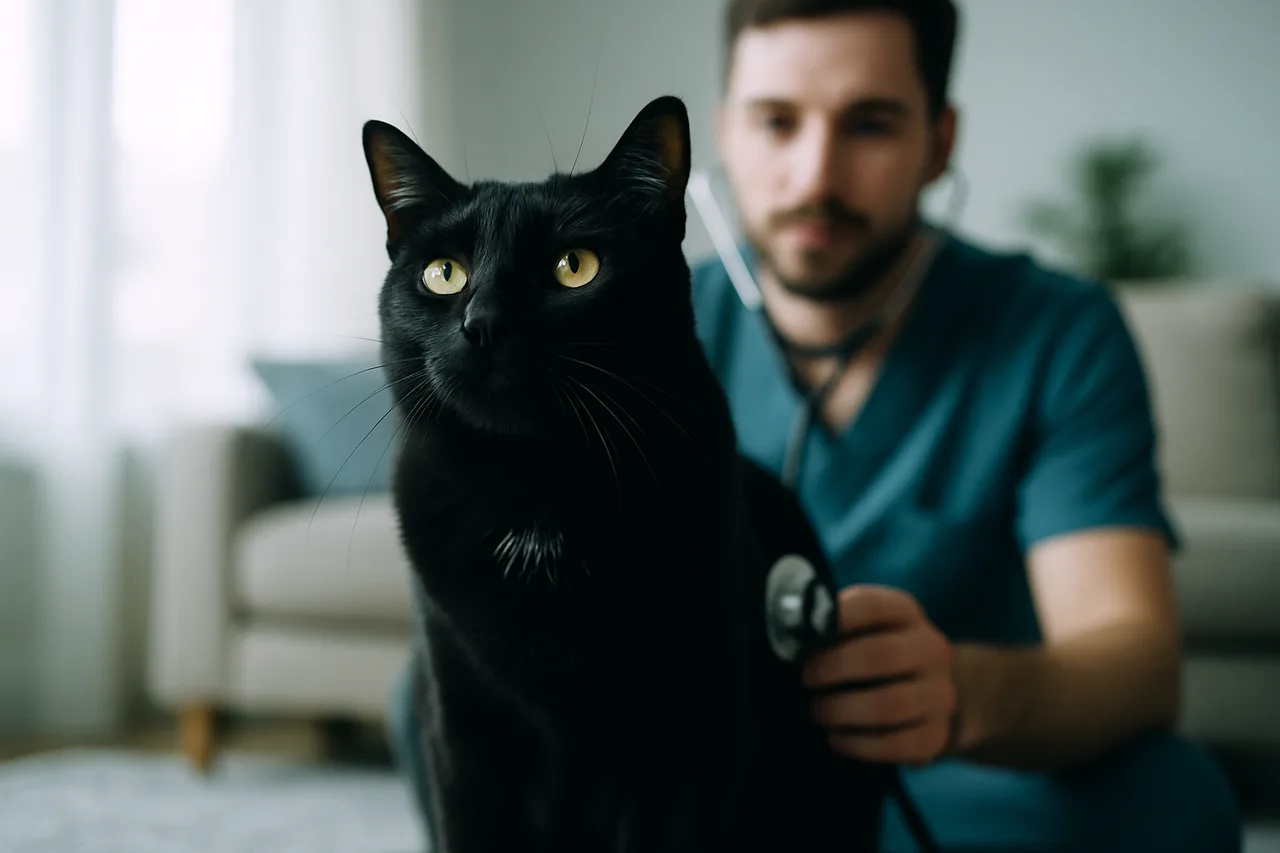
During anesthesia in dogs and cats, heart rate variability (HRV) largely reflects parasympathetic (vagal) tone and has therefore been studied as an indirect mirror of the balance between nociception (the painful stimulus reaching the nervous system) and antinociception (the analgesia the protocol provides). The logic is straightforward: a surgical stimulus not adequately covered by analgesia tends to shift the autonomic balance toward the sympathetic side, lowering vagal tone and, with it, certain HRV indices. In veterinary anesthesia, indices derived from vagal tone have been proposed as indicators of the intraoperative nociception/antinociception balance in dogs and cats. Importantly, this is a tool that complements standard multiparametric monitoring, heart rate, arterial pressure, ETCO2 and SpO2, rather than replacing it. Veterinary evidence is still being built, and the clinical decision always rests with the veterinarian.
Why HRV speaks to pain under anesthesia
The heart does not beat like a metronome. Between one beat and the next there are small oscillations in the RR interval, and those oscillations are continuously modulated by the autonomic nervous system. The parasympathetic branch, via the vagus nerve, acts quickly and produces the high-frequency variability tied to the respiratory rhythm. When nociception rises and analgesia does not offset it, the sympathetic response increases, vagal tone recedes and that fast variability falls. It is this beat-to-beat reading that vagal-tone indices try to turn into a number useful at the surgical table.
This reasoning first arose and matured in human anesthesia, where nociception monitors based on the parasympathetic response are already in use, and was later transposed to dogs and cats. In veterinary medicine, a parasympathetic-tone index was developed for dog, cat and horse precisely to flag a nociception/antinociception imbalance during anesthesia. Even so, the classic cardiovascular variables remain the main reference, and the available veterinary studies are still few.
What veterinary evidence shows in dogs
In dogs, several clinical and experimental studies have evaluated vagal-tone indices against cardiovascular variables. In a study of dogs undergoing elective surgery, the dynamic drop of the index preceded the rise in heart rate and/or arterial pressure, with moderate to good performance in predicting the hemodynamic reaction to the stimulus. In castrated dogs, the index decreased alongside hemodynamic reactions and recovered after fentanyl administration, although its predictive performance was only moderate, reinforcing the need for more studies across different scenarios and protocols.
In an experimental study of beagles anesthetized with propofol and sevoflurane, the monitor detected nociceptive stimuli of lower intensity than those needed to provoke cardiovascular changes, but with more intense stimuli the cardiovascular change occurred before the index responded. The practical reading is balanced: the index may anticipate subtle stimuli, yet it does not replace continuous attention to heart rate and arterial pressure, especially when stimulation is strong.
And in cats?
Feline evidence is even more preliminary, but it is starting to appear. In queens undergoing ovariectomy, the vagal-tone index showed greater diagnostic value for detecting nociception than heart rate alone, and when heart rate rose meaningfully the detection speed of the two was similar. The authors themselves note that it remains necessary to understand, in clinical routine, the meaning of a sympathetic activation flagged by the monitor when the heart rate increase is not clinically relevant.
The reading for feline practice is one of optimistic caution. The cat has autonomic particularities and responds in its own way to restraint, stress and drugs, which makes it risky to simply import thresholds defined in dogs or humans. For now, in cats, the index should be interpreted as one more data point within context, alongside heart rate, arterial pressure, ETCO2, SpO2 and anesthetic plane, never in isolation.
Limitations: why classic HRV is not enough
HRV under anesthesia is influenced by many variables at once, and that imposes clear limits. The anesthetics themselves depress autonomic tone: in dogs, classic time-domain HRV parameters such as SDNN fall as the anesthetic plane deepens, and drugs like dexmedetomidine and remifentanil alter HRV in distinct ways. In a study of dogs receiving isoflurane, with and without dexmedetomidine or remifentanil, at multiples of the minimum alveolar concentration, there was large overlap between protocols, leading the authors to question the usefulness of classic HRV parameters for assessing anesthetic depth and nociception.
Add to this arrhythmia, ectopic beats and motion artifacts, which distort the series of RR intervals; mechanical ventilation, which reshapes the high-frequency band; and neuromuscular blockers and vasoactive drugs, which uncouple heart rate, pressure and vagal tone. In sustained arrhythmias, any HRV-based index loses meaning. For all these reasons, the safe reading is to treat HRV as a trend and an alert, not as absolute truth nor as a number that decides management on its own.
How to use it in practice: complement, not substitute
In anesthetic practice, HRV and vagal-tone indices work best as an extra layer of information on top of the solid foundation of multiparametric monitoring. The logical sequence stays the same: secure the airway, oxygenation and ventilation (SpO2 and ETCO2), follow heart rate and arterial pressure, and, on top of that, watch the trend of the index as an early hint that the nociception/antinociception balance may be deteriorating, or that the analgesia given has taken effect. A fall in the index together with coherent hemodynamic signs strengthens the decision to reinforce analgesia; an isolated index, without context, does not.
It is in this layer of continuous information that a connected monitoring ecosystem comes in. The INmonitor centralizes the patient's multiparametric parameters, and the ECG signal from devices such as the INcardio X and the INcardio Agile, integrated with the INpulse One platform and the cloud history in INcloud, gives the anesthetist the reliable beat series on which any HRV analysis depends. The core message remains: HRV enriches the reading of the anesthetic plane, but it is the veterinarian, combining all the data with the patient in front of them, who decides the course of action.
Sources
- Intraoperative nociception-antinociception monitors: A review from the veterinary perspective (2019) PMID 32007442
- Evaluation of the nociception-antinociception balance using the Parasympathetic Tone Activity index in dogs anaesthetized for castration (2022) PMID 36184486
- Efficacy of the Parasympathetic Tone Activity monitor to assess nociception in healthy dogs anaesthetized with propofol and sevoflurane (2019) PMID 31635963
- Evaluation of the Parasympathetic Tone Activity (PTA) index to assess the analgesia/nociception balance in anaesthetised dogs (2017) PMID 28575801
- The Performance of Using the Parasympathetic Tone Activity (PTA) Index to Assess Intraoperative Nociception in Cats (2024) PMID 38535855
- Effects of isoflurane with and without dexmedetomidine or remifentanil on heart rate variability before and after nociceptive stimulation at different multiples of minimum alveolar concentration in dogs (2013) PMID 23627378