

Digital Anesthesia Record: The Value of Continuous Monitoring Documentation in Veterinary Anesthesia
The anesthesia record is the periodic documentation of a patient's vital parameters during canine and feline anesthesia. Learn which variables to record, how often, and why continuous digital documentation, with trends and cloud history, adds clinical and medicolegal value.
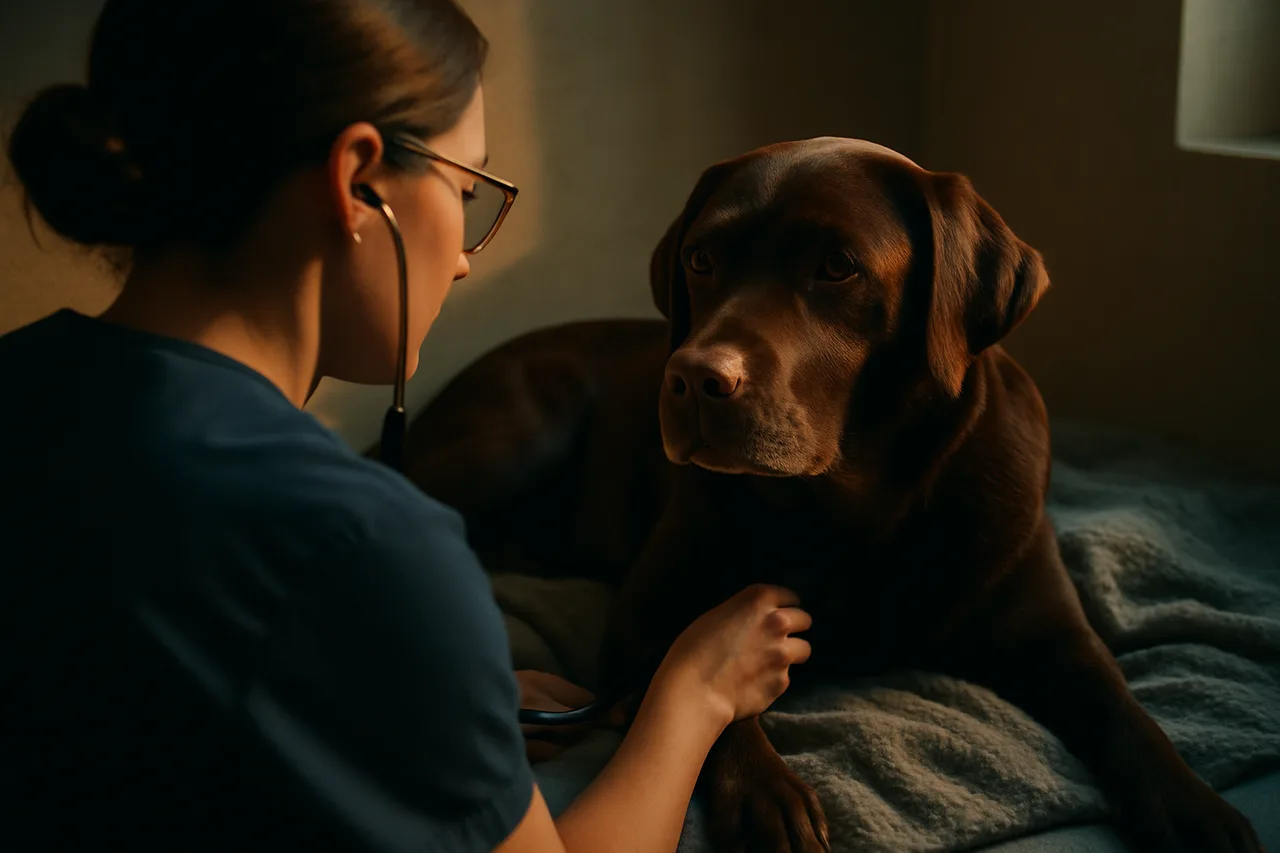
The anesthesia record is the periodic, structured documentation of a patient's physiological parameters, administered drugs and relevant events throughout the entire course of canine and feline anesthesia. Veterinary anesthetic monitoring guidelines recommend that these values be noted at regular intervals, typically every few minutes, so the team follows the animal's trajectory rather than a single isolated reading. Documenting this digitally and continuously, with trends and history integrated into the cloud, turns the record into a tool for early detection, traceability and medicolegal value. The clinical decision of how to anesthetize, monitor and intervene always rests with the attending veterinarian.
What the anesthesia record is and why it exists
During a procedure under sedation or general anesthesia, the patient loses variable degrees of protective reflexes and of the ability to compensate for cardiovascular and respiratory changes. The anesthesia record is the document where the team notes, along a timeline, how the dog or cat responded at each stage: induction, maintenance, surgical stimuli, drug adjustments and recovery. More than a formality, it is the memory of what happened to that patient.
The 2025 American College of Veterinary Anesthesia and Analgesia (ACVAA) guidelines and the 2020 AAHA anesthesia and monitoring guidelines for dogs and cats reinforce that monitoring and recording are parts of the same process: the goal is not merely to watch numbers on a screen, but to document the trajectory in order to guide decisions. The very existence of a periodic record presumes that the trend over time carries more clinical information than any single reading.
The risk context is worth recalling. The CEPSAF study, conducted in the United Kingdom with nearly 100,000 dogs and about 79,000 cats, estimated anesthesia and sedation-related death risk at roughly 0.17% in dogs and 0.24% in cats, substantially higher in sick patients (ASA 3 to 5). A large share of deaths occurred postoperatively, reinforcing that structured vigilance does not end when the procedure does.
Which parameters to record
Veterinary guidelines organize monitoring around four major functions: circulation, oxygenation, ventilation and temperature, plus anesthetic depth and, when applicable, neuromuscular blockade. Translated to the anesthesia record, this means periodically noting the following parameters.
Circulation: heart rate and pulse quality, ECG tracing (rhythm and morphology) and non-invasive blood pressure (NIBP, by oscillometry or Doppler). Oxygenation: peripheral oxygen saturation (SpO2) by pulse oximetry, ideally alongside mucous membrane color. Ventilation: respiratory rate and, whenever available, capnography with end-tidal carbon dioxide (ETCO2), considered the best indicator of ventilation and of tube placement. Body temperature: especially relevant in cats and small patients prone to hypothermia. Anesthetic depth: assessed clinically (eye position, tone, reflexes, response to stimulus). And, cutting across all of these, documentation of administered drugs with time and dose, and of events (intubation, start and end of surgery, complications, interventions).
No monitor replaces the presence of a dedicated person watching the patient. The guidelines are clear in placing the trained professional at the center of monitoring; equipment and digital recording exist to extend that person's perception, not to outsource vigilance.
How often to record
The consensus recommendation in veterinary guidelines is periodic documentation at short intervals throughout the entire anesthesia, in practice typically every few minutes, and more frequently during periods of greater instability: induction, positioning, intense surgical stimuli and recovery. The exact interval is a clinical decision that depends on the patient, the procedure and the physical status (ASA classification).
The central point is that a single value reveals no trend. A blood pressure of 80 mmHg may be acceptable if stable, or a warning sign if it is the third value in a progressive decline. It is precisely the sequence of records, viewed side by side, that allows an isolated fluctuation to be distinguished from genuine deterioration, often before the single number crosses a critical threshold.
Why record digitally and continuously
Trends over time. The greatest gain from continuous digital recording is making the trend visible. Instead of spaced manual notes, the curve of each parameter evolves on screen and is stored, helping the team perceive a gradual deterioration, a deepening hypotension or a developing hypothermia, before any single isolated value, on its own, triggers an alarm.
Traceability and medicolegal value. A continuous record, with precise timestamps and no gaps, documents what was observed and what was done. In a possible case review, this faithful history is the best evidence that monitoring followed good practice, protecting the patient, the team and the clinic. Sparse, retrospective notes are precisely the weak point of manual records.
Integration into the patient's history. When today's record talks to those of prior procedures, the anesthetist starts from a better baseline: how that dog responded to the last induction, what its blood pressure pattern was, whether arrhythmia occurred. The record stops being an isolated document and becomes part of the animal's clinical history over its lifetime.
An important caveat: continuous recording expands the available information but does not interpret on its own. Trends, alarms and curves are inputs to the decision; clinical interpretation and management remain the veterinarian's responsibility.
How the connected monitor and the cloud enable this record
In practice, manually recording all of these parameters every few minutes, while still caring for the patient, is demanding. This is where a connected multiparameter monitor makes a difference: the INmonitor simultaneously measures ECG, SpO2, ETCO2, NIBP, temperature and respiratory rate and can relay these readings continuously, reducing dependence on manual note-taking and preserving the granularity of the curve.
When this data flows to INcloud, it no longer lives only on the equipment in the room: it becomes available as trends and as history linked to that patient, accessible for later review and for comparison with future procedures. It is this bridge, connected monitor plus cloud, that turns on-screen monitoring into a durable, traceable record, aligned with what veterinary guidelines describe as good anesthetic documentation.
An important limit to make explicit: the INpulse ecosystem, with the INmonitor and INcloud, offers the capture, recording and organization of this data as support for the team. It does not decide anesthetic management nor replace the presence and judgment of the veterinarian, who remains responsible for interpreting the data and caring for the patient.
Sources
- The American College of Veterinary Anesthesia and Analgesia Small Animal Anesthesia and Sedation Monitoring Guidelines 2025 (2025) PMID 40447502
- 2020 AAHA Anesthesia and Monitoring Guidelines for Dogs and Cats (2020) PMID 32078360
- The risk of death: the confidential enquiry into perioperative small animal fatalities (CEPSAF) (2008) PMID 18466167