

Artificial intelligence in veterinary ECG analysis: what is changing in dog and cat cardiology
How artificial intelligence and machine learning are supporting ECG analysis in dogs and cats: arrhythmia triage, faster teleconsulting and the irreplaceable role of the cardiologist, with the caution veterinary medicine demands.
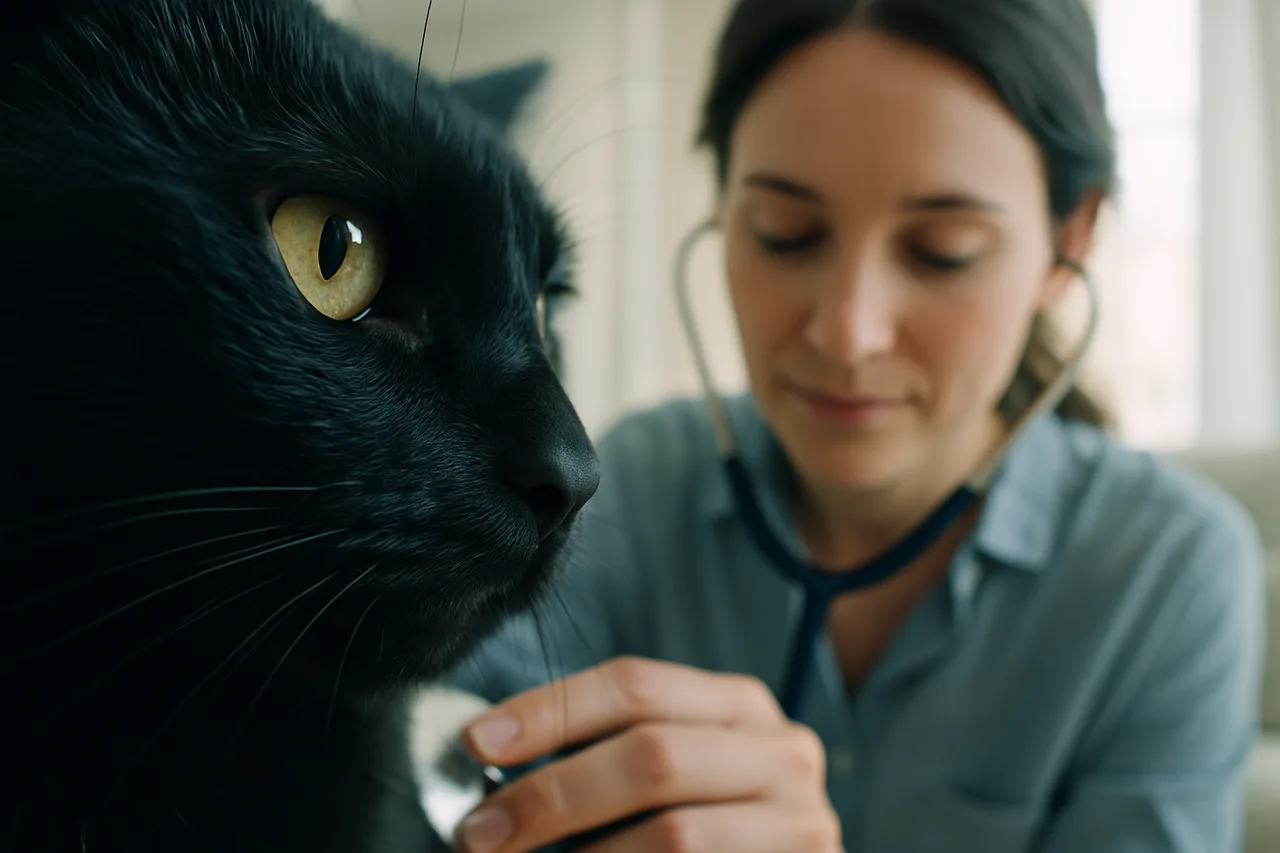
Artificial intelligence (AI) and machine learning are beginning to support electrocardiogram (ECG) analysis in dogs and cats, helping to detect and classify arrhythmias, triage tracings that need priority attention and speed up the teleconsulting workflow. One point must be clear from the outset: in veterinary medicine these tools act as decision support, not as a replacement for the report. Clinical interpretation and the final report remain the responsibility of a veterinarian, ideally a cardiologist, who signs the document. Veterinary evidence is still early and labeled datasets for dogs and cats are scarce, so every application requires careful validation before routine use.
How AI is being applied to dog and cat ECG
AI in ECG was born and first matured in human medicine, where convolutional neural networks already analyze large volumes of tracings. That background helps explain the path, but it does not transfer automatically to small-animal practice: heart rate, wave morphology and arrhythmia patterns in dogs and cats differ from those of humans, and algorithms trained on people are not ready-made for veterinary use.
In veterinary medicine the studies are still few, yet promising and increasingly specific. In dogs, machine learning models have been used to distinguish sinus node dysfunction from high parasympathetic modulation, a difficult differentiation that often confuses the human eye, combining Poincaré analysis and three-dimensional density grids from 24-hour Holter. Another study applied a deep learning algorithm to six-lead ECG to localize accessory pathways in canine ventricular preexcitation, identifying fiducial points (from the onset of the P wave to the delta wave) and classifying the pathway with good accuracy. These are examples of narrow, well-defined tasks, not a complete automated report.
In practice, the most mature applications today are auxiliary: automatic detection and labeling of complexes, triage of long tracings to flag suspicious segments to the cardiologist, prioritization of the teleconsulting queue, and preprocessing that reduces noise and artifact. On connected platforms such as INpulse One and INcloud, this kind of support can shorten the time between exam capture and human reading, without ever removing that reading.
What changes in clinical routine and teleconsulting
For general practice, the most immediate gain is workflow. A tracing captured during the consultation can be pre-analyzed to flag findings worth priority review, helping decide when to refer to the cardiologist sooner. On long exams such as Holter, automatic triage of suspicious segments saves hours of manual review and reduces the chance of a brief event being missed.
In teleconsulting, AI can sort the queue by clinical priority, standardize the quality of the received signal and offer the cardiologist preliminary annotations that they confirm, correct or discard. The intended result is a faster report, without speed compromising care. What does not change is the core point: AI prepares and organizes, the human interprets and signs.
It is worth remembering that none of this removes the need for a well-recorded ECG. Correct electrode placement, proper restraint and artifact control remain the foundation; no algorithm fixes a poor tracing, and low-quality data tends to produce low-quality output.
The cardiologist at the center: AI supports, it does not replace
Interpreting an ECG is not just classifying waves. It integrates the clinical history, the physical exam, breed, size, the patient's autonomic state, current medication and the case context, something an algorithm trained on isolated tracings does not see. That is why the cardiologist stays at the center of the decision: it is the cardiologist who gives clinical meaning to what the machine merely flags.
The recommended working model is professional-in-command, with AI as an assistant. The tool can speed up, standardize and draw attention to what matters, but responsibility for diagnosis and management is, and must remain, human. This division protects the patient, protects the owner and protects the veterinarian.
Limitations and caution
There are important limitations that call for prudence. The first is the scarcity of large, well-labeled veterinary datasets: most algorithms depend on many examples annotated by specialists, and in dogs and cats these sets are still small and not very diverse. Models trained on few breeds, ages or sizes may not generalize well.
The second is the risk of error in uncommon morphologies. AI tends to perform better on what is frequent and to fail on what is rare, precisely the atypical cases that most require a specialist. Complex arrhythmias, artifacts that mimic pathology and patterns underrepresented in training are predictable blind spots. For that reason any tool should be independently validated, ideally in prospective veterinary studies, before being incorporated into routine, and its performance should be monitored over time.
Because this is a health topic, a conservative stance is warranted: an automatic suggestion should never be treated as a diagnosis, and disagreements between the algorithm and the human evaluator should always be resolved in favor of the clinical assessment.
Ethics and responsibility: the veterinary framework
In Brazil, veterinary telemedicine, which includes telediagnosis and teleconsulting reports, is regulated by CFMV Resolution No. 1,465/2022. It requires that the report or opinion in telediagnosis be signed electronically by the veterinarian who provided the service, with an advanced electronic signature, and that responsibility rests with the professional. In other words: regardless of whether AI assisted the analysis, it is a person, the veterinarian, who is accountable for the report.
This has direct practical implications. AI is a support tool within a veterinary medical act, not an issuer of reports. Using algorithms does not transfer responsibility to the software or to the manufacturer; the professional who signs remains responsible for the content. Platforms offering this kind of feature should be transparent about what the algorithm does and about its limitations, preserve the traceability of the exam and keep the veterinarian in control of the final decision.
INpulse develops connected ECG and teleconsulting technology with this premise: AI exists to support and speed up the cardiologist's work, never to replace clinical judgment or the report signed by a veterinarian. This article is informational and does not replace assessment by a qualified professional.
Sources
- Use of machine learning and Poincaré density grid in the diagnosis of sinus node dysfunction caused by sinoatrial conduction block in dogs (J Vet Intern Med, 2024) (2024) PMID 38682817
- Machine learning differentiates right posterior from right anterior accessory pathways using 6-lead electrocardiograms in dogs with ventricular preexcitation (J Am Vet Med Assoc, 2025) (2025) PMID 41223534
- Use of Artificial Intelligence to Detect Cardiac Rhythm Disturbances in Athletes: A Scoping Review (J Vet Intern Med, 2025) (2025) PMID 41017277
- Resolução CFMV nº 1.465, de 27 de junho de 2022 (regulamenta a telemedicina veterinária no Brasil) (2022)